Thursday, 22/1/2026
Share This Article :
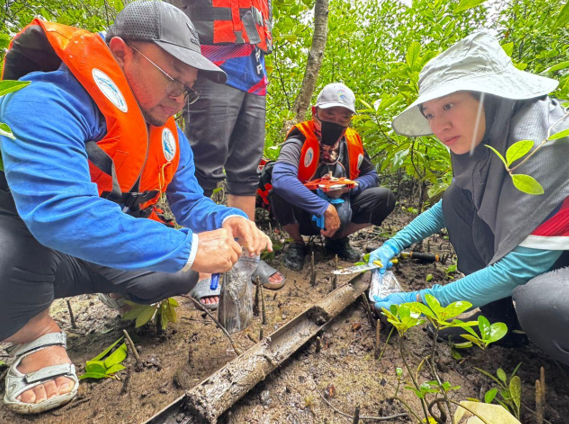
Universiti Malaysia Terengganu’s Institute of Aquaculture and Fisheries (AKUATROP) recently led a cross-institutional scientific research expedition to the Kong Kong wetlands in Pasir Gudang, Johor, to uncover the area’s ecological significance.
Serving as the scientific backbone of the expedition, AKUATROP played a pivotal role in coordinating the research design, standardizing sampling protocols, and fostering interdisciplinary collaboration among researchers from Universiti Malaya, Universiti Kebangsaan Malaysia, Universiti Putra Malaysia, Universiti Malaysia Sarawak, and Universiti Tun Hussein Onn Malaysia.
AKUATROP further enhanced the expedition’s impact by engaging local communities, particularly fishermen, in basic scientific monitoring activities, thereby strengthening their understanding of wetland ecosystems while promoting participatory research through the Living Lab framework.
The preliminary findings indicate that the Kong Kong wetlands support a high diversity of aquatic flora and fauna, including commercially important species, endemic organisms, and ecologically sensitive taxa. Early observations suggest that the area functions as a critical nursery and feeding ground for various marine and estuarine species.
These findings highlight the ecological significance of Kong Kong as a natural buffer that supports fisheries productivity and ecosystem resilience.
The integration of local environmental knowledge from fishermen with scientific data further enhanced the accuracy and relevance of the findings, providing a more comprehensive understanding of ecosystem dynamics and environmental change.
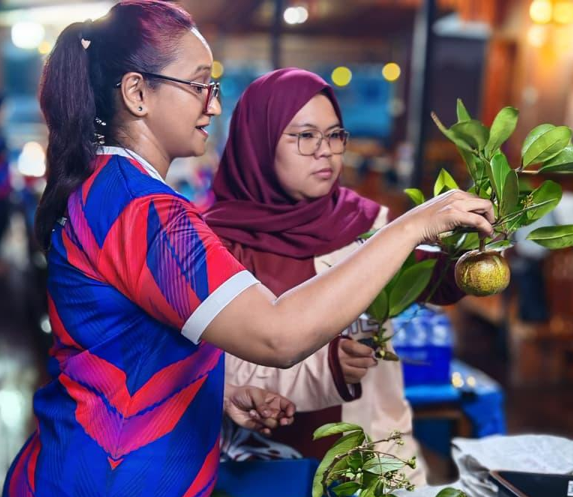
A key outcome of the expedition is the development of local citizen scientists. By equipping community members with basic scientific skills and ecological awareness, the expedition empowered them to become frontline stewards of the wetland ecosystem. Their continuous involvement ensures long-term monitoring, early detection of environmental threats, and sustainable resource management.
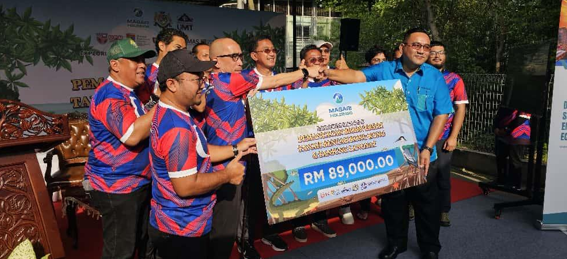
Based on the data and experience gained from the expedition sponsored by Kumpulan Masari Holdings Sdn. Bhd., several future initiatives have been proposed. These include the establishment of a Kong Kong Wetlands Community Gallery as a permanent knowledge and heritage centre, showcasing biodiversity records, fishermen’s history, ecological maps, and long-term environmental changes.
In the longer term, the systematic conservation of the Kong Kong wetlands may support its elevation as a state park. Such recognition would strengthen legal protection, enhance institutional management, and position Kong Kong as a hub for environmental education, sustainable tourism, and high-impact scientific research.
These initiatives align closely with regional development agendas for ensuring that biodiversity conservation contributes directly to socio-economic development and intergenerational well-being.
With sustained commitment from academic institutions, industry partners, government agencies, and local communities, Kong Kong has strong potential to become a national model for community-based wetland conservation and sustainable development.
The expedition demonstrates that collaborative efforts can advance environmental conservation, scientific research, and community empowerment simultaneously.
By: Associate Professor ChM. Ts. Dr. Nor Azman Kasan, Ts. Dr. Mohd Ihwan bin Zakariah and Azmie Ghazali, Higher Institution Centre of Excellence (HICoE), Institute of Tropical Aquaculture and Fisheries (AKUATROP)
