Wednesday, 15/04/2026
Share This Article :
By : Associate Professor Gs. Dr. Mohd Sofiyan Sulaiman
Universiti Malaysia Terengganu (UMT) continues to strengthen its role as a knowledge institution contributing to national development through the involvement of its researcher in a high-impact water resources project conducted with the National Water Research Institute of Malaysia (NAHRIM).
The project, entitled Development of Water Resources Profile for Federal Territories of Putrajaya and Kuala Lumpur, was implemented following NAHRIM’s official appointment in January 2025, with a study duration of 12 months. The project focused on developing a comprehensive water resources profile to support sustainable water resources planning, management, and long-term resilience for the Federal Territories of Kuala Lumpur and Putrajaya.
The main motivation of this study was to develop a long-term understanding of water resources sustainability in the Federal Territories of Kuala Lumpur and Putrajaya by assessing water yield, water demand, alternative water resources and water surplus-deficit, and water stress index over an extended period from 1980 to 2050. The study integrates both historical climate records and future climate projections to estimate how water availability and demand may evolve under changing environmental and development conditions. Through this approach, the project provides an important scientific basis for evaluating future water security and supporting more sustainable water resources planning and management for Kuala Lumpur and Putrajaya.
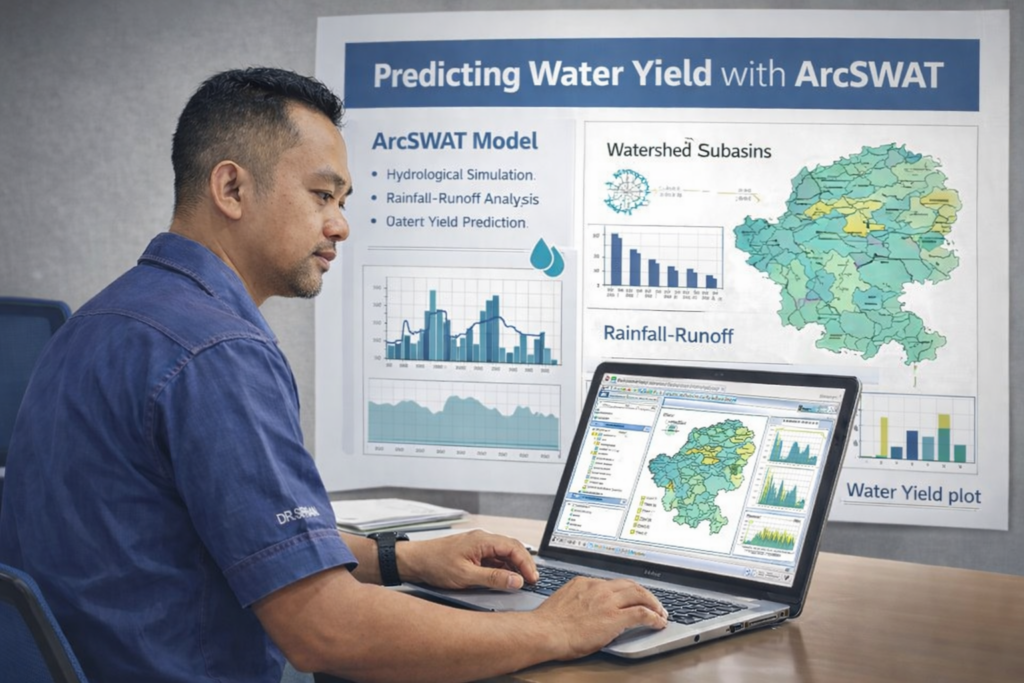
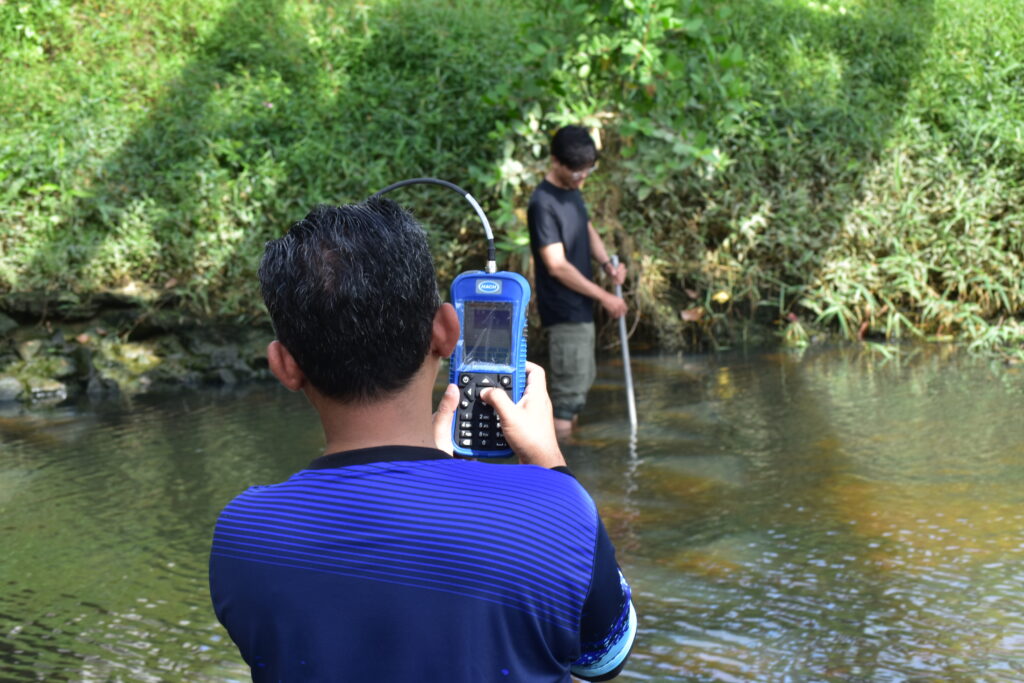
The study adopted a comprehensive approach covering technical data collection and review, site investigation, field surveys, water quality monitoring, water demand analysis, hydrological and hydraulic assessment, water resources modelling, and evaluation of both existing and alternative water resources. This work has produced an important strategic knowledge base to support decision-making in addressing rising water demand, urban development pressure, water quality issues, and climate change risks.
Among the key findings, Kuala Lumpur was identified as facing more significant water resource pressure due to high demand, limited safe yield, and ongoing urban water management challenges. Putrajaya, in contrast, demonstrated a more stable condition, supported by its lake and wetland system which helps regulate and sustain local water resources. In addition, the study identified substantial potential for alternative water resources, including rainwater, stormwater, groundwater, treated wastewater, and Putrajaya Lake, with a total estimated potential of approximately 987.5 MLD. These findings provide strong support for more sustainable, resilient, and integrated water supply strategies in the future.
UMT’s involvement in this project reflects the university’s capability to contribute academic and technical expertise at the national level, particularly in the fields of water resources, hydrology, modelling, and environmental management. This achievement not only enhances UMT’s visibility, but also reinforces its reputation as an institution actively supporting knowledge-based solutions for societal well-being and national sustainability.